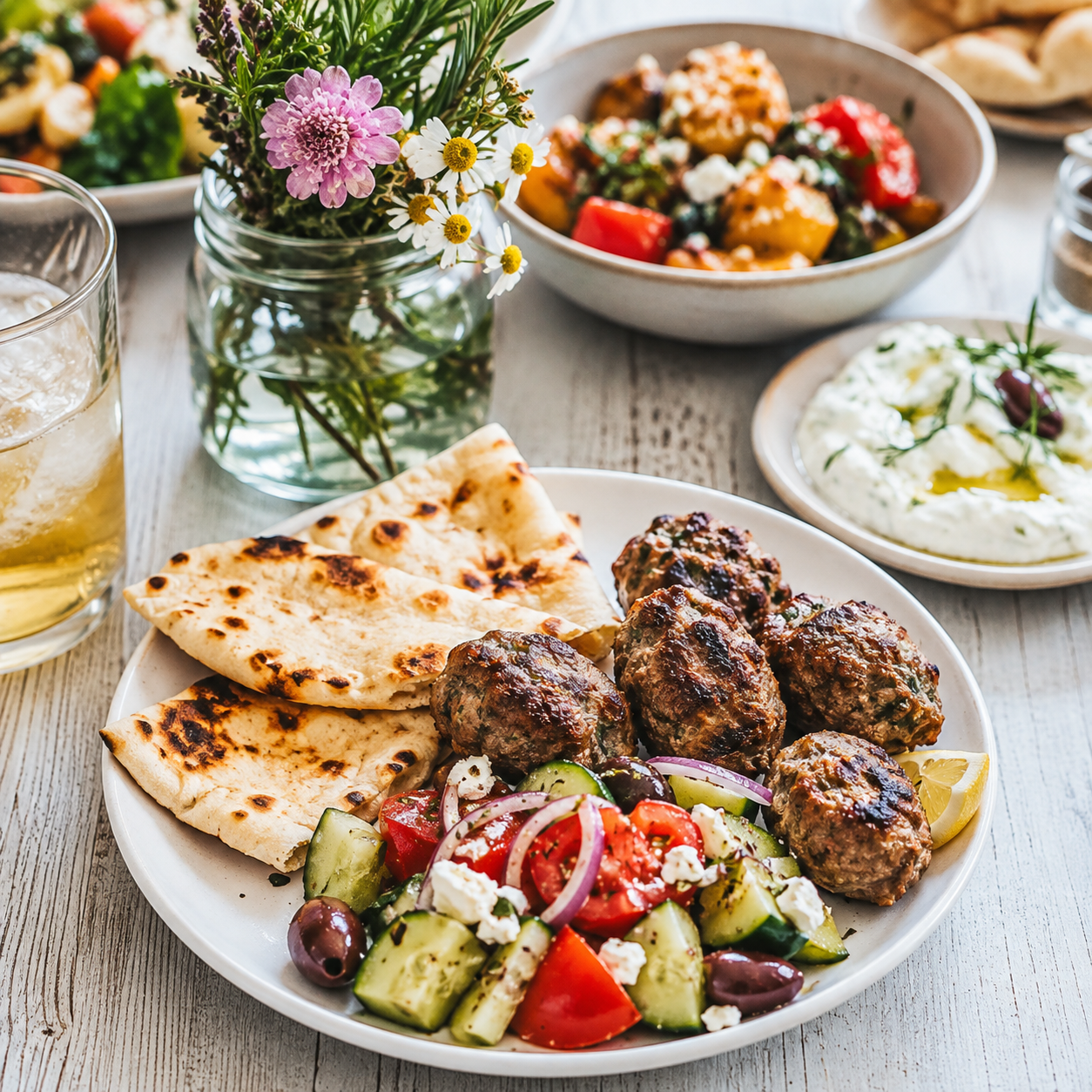
If you’ve ever sat at a seaside taverna in Greece, waves crashing nearby, warm pita on the table, a village salad glistening with olive oil, you’ve probably noticed one thing almost immediately:
Greeks are absolutely obsessed with oregano.
It’s sprinkled over grilled fish, showered onto fries, rubbed into lamb, mixed into marinades, and dusted generously over the iconic horiatiki salad. In Greece, oregano (rigani) isn’t just a seasoning. It’s part of the country’s identity.
And once you understand why, you start tasting Greece differently.
The Herb That Grows Everywhere
One of the reasons oregano became such a cornerstone of Greek cooking is simple: it thrives here naturally.
Travel through the Greek countryside and you’ll smell it before you even see it. Wild oregano grows across rocky hillsides, mountain paths, and sunbaked islands, soaking up the intense Mediterranean heat and dry sea air.
But those harsh conditions are exactly what make Greek oregano special.
Because the plant has to struggle to survive in poor soil and strong sun, it develops powerful essential oils like carvacrol and thymol. That’s why authentic Greek oregano tastes incredibly bold—peppery, earthy, aromatic, and almost spicy compared to the milder supermarket versions many people know abroad.
In Greece, oregano tastes alive.
The “Joy of the Mountain”
Even the word oregano has Greek roots.
It comes from the ancient Greek words oros (mountain) and ganos (joy or brightness), meaning “joy of the mountain.” And honestly, after hiking through a Greek village with the scent of wild herbs in the air, the name feels perfect.
According to mythology, the goddess Aphrodite herself created oregano on Mount Olympus as a symbol of happiness. Ancient Greeks used it in wedding crowns to bless newlyweds with joy and planted it near homes for protection and good fortune.
When a culture has associated a herb with happiness and divinity for thousands of years, it naturally becomes more than just food seasoning.
Greece’s Ancient “Food as Medicine” Philosophy
Long before oregano became a kitchen essential, it was considered medicine.
Hippocrates, the famous Greek physician often called the father of modern medicine, used oregano for everything from stomach pain to respiratory illnesses and infections. It was brewed into teas, infused into remedies, and valued for its antiseptic qualities.
That philosophy still quietly exists in Greek food culture today.
Greek cuisine has always embraced ingredients that nourish as much as they flavor: olive oil, lemon, herbs, fish, greens, yogurt, honey. Oregano fits perfectly into that tradition. Generations grew up believing that adding oregano to meals wasn’t just delicious, it was good for you.
And modern science actually backs much of that up.
Why It Tastes So Good with Greek Food
Beyond history and mythology, oregano simply works beautifully with the core flavors of Greece.
The combination of olive oil, lemon juice, and dried oregano is basically the heartbeat of Greek cooking. That classic flavor profile appears everywhere, from grilled octopus to roasted potatoes to souvlaki marinades.
Oregano also balances rich foods perfectly. Greece loves bold flavors: salty feta, fatty lamb, charred meats, generous olive oil. Oregano cuts through all that richness with brightness and a slightly bitter edge that keeps dishes tasting fresh instead of heavy.
And unlike delicate herbs such as parsley or cilantro, oregano actually becomes stronger when dried. For centuries, families gathered wild oregano during summer, hung it to dry, and used it throughout winter. It was practical, flavorful, and always available.
The Secret Behind That Famous Greek Salad
If you order a traditional horiatiki salad in Greece, don’t expect a tiny decorative sprinkle of herbs.
You’ll often get a full snowfall of oregano over tomatoes, cucumbers, olives, feta, and olive oil.
And surprisingly, it’s not just about flavor.
The compounds inside oregano interact remarkably well with olive oil, helping the body absorb beneficial antioxidants more effectively. So that simple Greek salad isn’t just refreshing, it’s a small example of the Mediterranean diet working exactly as intended.
More Than a Herb
At the end of the day, Greeks use so much oregano because it tells the story of the country itself.
It grows wild on the mountainsides. It carries ancient myths and traditions. It preserves generations of cooking wisdom. And most importantly, it makes simple food taste extraordinary.
So the next time you sit at a Greek taverna and see someone casually covering their fries with oregano like it’s parmesan cheese, just know:
You’re witnessing a culinary tradition that’s older than democracy itself.
Visit a local spice shop on our Small group Greek Traditional Food Tour around Athens with Tastings